


Learn about Ethereum’s gas fees and how to reduce them.
Whenever you learn about the Ethereum network, one thing is sure to come up: gas fees. They’re a very popular and important part of Ethereum.
Gas fees can seem a bit annoying, especially when they get high. But there’s actually a simple and logical reason behind these fees. Fortunately, there are some easy ways to reduce gas fees.
So read on, as we explain in simple terms how gas fees work, why they’re necessary, and whether Ethereum has done a good job of reducing these fees for its users over time.
Table of Contents
What Is a Gas Fee?
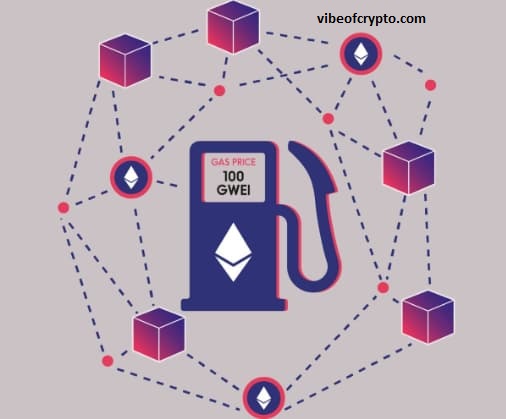
A gas fee is a small amount of money you pay when performing any task on Ethereum.
For example, when you send ETH to someone, the network charges you a small fee to ensure the transaction goes through smoothly. This small charge is called a gas fee.
You might be thinking, isn’t this virtually the same as a transaction fee?
Yes, they’re pretty much the same. The only difference is that other crypto networks call it a transaction fee, while Ethereum calls it gas. Gas is so named because it keeps Ethereum computer running, much like fuel is used to drive a car.
Ethereum users pay a gas fee on every transaction. Whether you’re buying crypto, acquiring NFTs, or transferring any digital item, a gas fee is required. This fee isn’t fixed directly in ETH, but rather calculated in Gwei, a smaller unit of Ethereum.
What Is Gwei?
No need to worry. Gwei isn’t a separate or new crypto that you need to buy. It’s just a small portion of Ether (ETH).
Just like a cent is a small fraction of a dollar, Gwei is a very small fraction of Ether. There are actually 1 billion pieces of Ether, and one of those pieces is called Gwei.
To understand, remember this: You still pay gas fees in ETH. Gwei is just used to simplify the numbers so that the amount is easier to understand.
Some simple examples:
10 Gwei = 0.00000001 ETH
100 Gwei = 0.00000010 ETH
1,000 Gwei = 0.00000100 ETH
10,000 Gwei = 0.00001000 ETH
If you understand the difference between Gwei and ETH, you’ll already have an idea of the fee involved when confirming a transaction.
Why Gas Fees Are Necessary
When you pay a gas fee, this money doesn’t go to a company boss or a hidden team. It goes directly to the people who help run the Ethereum network. These people are called validators.
Over time, Ethereum has used two methods to verify transactions. The first method was Proof of Work, in which validators competed to process the next block. The second method is Proof of Stake, in which people become validators by locking their ETH.
In both methods, the job of validators is to ensure that every transaction is safe, accurate, and not fraudulent. For this work, they need strong computers and electricity, etc. Therefore, they need to get paid.
This is where the role of gas fees comes into play. Gas fees are a means of paying validators. Without these fees, people would stop becoming validators, and the Ethereum network would become slow, weak, and unsafe. Therefore, gas fees are crucial to keeping Ethereum running smoothly.
How Much Are Ethereum Gas Fees?
Before understanding the average gas fee, it’s important to know that the exact price of gas depends on the supply and demand of the blockchain.
In simple terms, gas fees can fluctuate significantly within a single day. Sometimes lower, sometimes higher. It’s good that websites like Etherscan display gas prices in real time, so you can check the current rate.
The average Ethereum gas fee generally ranges from 18 to 50 Gwei. However, when the network is busy, it can be higher, and when the flow is low, the fee drops.
To illustrate, if the gas fee is 18 Gwei, different transactions could cost approximately this much:
- Swap: approximately $16
- Borrowing: approximately $14
- NFT sale: approximately $20
- Bridging: approximately $5
- Base Fee and Priority Fee
When you check ETH gas prices, you may also see the terms base fee and priority fee.
The base fee was introduced in August 2021. This is a fixed fee that the network itself decides to process the transaction.
The priority fee is extra money you pay to speed up your transaction. Think of it like tipping to get ahead in line. The more tips, the faster the transaction is completed. This option is especially useful for those who trade where time is crucial.
Why Gas Fees Can Be So High
The biggest reason for Ethereum’s high gas fees is its size and popularity.
Remember, Ethereum is the second-largest crypto network in the world in terms of active users, behind only Bitcoin. In 2024, more than 500,000 active addresses were running on the Ethereum blockchain daily.
And Ethereum is also considered the home of dApps and NFTs, so its user base is even larger.
The more people, the more transactions, and the more work validators do, the more they need to be paid. This reflects on end users—when the network is busy, such as during peak trading hours, fees are higher.
But there’s no need to worry, there are some simple ways to reduce Ethereum gas fees.
How to Lower Gas Fees
If you’re bothered by high gas fees when using Ethereum, there are a few simple ways you can reduce them slightly.
Heatmaps: Choose a Quiet Trading Time
When the Ethereum network is busy, meaning many people are buying or selling simultaneously, the blockchain slows down and gas fees increase.
So the simplest way is to make transactions during quieter times on the network, such as at night or on weekends.
Heatmaps and gas trackers are useful tools for this. Bright spots indicate quieter times on the network where fees are slightly lower.
Keep in mind that over 32% of Ethereum Gas Fees users are in the US, so transacting on nights or weekend evenings in the US will have the greatest impact on fees.
Optimize Transaction Amounts
Another easy way is to optimize your transactions. This means combining multiple transactions into a single order to reduce overall fees.
You can do this manually or use DEX aggregators like 1inch and Matcha. These platforms analyze your transactions to find the most cost-effective route.
Layer 2 Solutions
Layer 2 technology are platforms that handle transactions outside of the main Ethereum chain. This reduces fees because the network isn’t busy.
Some examples:
Polygon Runs alongside Ethereum but is separate.
Arbitrum and Optimism Use rollups, meaning transactions are recorded off-chain and sent to the mainchain, reducing fees.
Think of a car being shifted from a busy highway to a quiet road; a faster and cheaper journey.
EVM and Gas Fees
The EVM is a virtual computer where developers can build dApps and tokens.
Some popular EVM-compatible blockchains also use the Ethereum Gas Fees architecture, so they also have gas fees, but prices may vary.
Average gas fees for EVM chains (in Gwei):
- Polygon PoS (POL) = 60.0
- BNB Smart Chain (BSC) = 1.1
- Avalanche (AVAX) = 32.0
- Fantom (FTM) = 26.0
Keep in mind these fees may differ from those for ETH transactions in Gwei, as the tokens on these chains are different.
Has Ethereum 2.0 Lowered Gas Fees?
Ethereum 2.0 wasn’t just a minor update; it was a complete overhaul of the Ethereum network, proposed to fix numerous network issues.
People thought this would mean lower gas fees, but this was a misconception. According to Ethereum.org’s roadmap, the purpose of 2.0 wasn’t to lower gas fees, but to switch the consensus mechanism to Proof of Stake.
Still, did the changes impact gas fees?
Yes, but not much.
Before September 2022 , gas fees were highly unpredictable, ranging from 22 to 100 Gwei or more.
After Proof of Stake, fees became a little more manageable, averaging between 15 and 50 Gwei.
Ethereum user base is also more stable now; previously, the network would occasionally lose control, causing fees to become very high.
So, the volume of transactions hasn’t changed much, but the Ethereum 2.0 updates significantly reduced fees and made the network reliable.
- Bitcoin 107K Breaks Strong as Bulls Eye Big Win
- Trump Crypto ETF Targets BTC And ETH in 2025
- Metaplanet Bitcoin Purchase Sparks Explosive 1111 BTC Buy
- Hyperliquid Builder Codes Top $10M New Crypto Boom Coming?
- Bitcoin Hits $123K Ahead of Make-or-Break
- Stellar (XLM) Explained: Easy Guide for Beginners
- JPMorgan Launching Crypto-Backed Loans With BTC and ETH
- SYRUP Defies Market Trends After Upbit Listing
- SHIB Hype Fades While Remittix Rises as the Smarter Crypto Choice
- CryptoPunks NFT Sells for $2.5M as NFT Market Shows Fresh Momentum
- XRP Price Expansion Phase: Can Ripple Reach $7 in 2025?
- Cardano WLFI Stablecoin and Chainlink Partnerships
- Binance Futures Trading Paused: Market Prices Rattled
FAQs – Ethereum Gas Fees
What is The Merge?
The Merge is a term coined by the Ethereum Gas Fees community to describe Ethereum switch from Proof of Work to Proof of Stake.
Did Ethereum 2.0 Improve Scalability?
A major goal of Ethereum 2.0 was to improve the network’s scalability. Some progress has been made in this regard, especially after The Merge.
What Does ERC-20 Mean?
ERC-20 is a token standard that allows developers to create tokens and NFTs on the Ethereum network. In the crypto ecosystem, minting a token is also known as minting.