
Pump.fun $3 million, a memecoin platform running on Solana, has introduced a new idea so that new projects aren’t limited to token launches, but also achieve long-term goals.
Pump.fun has launched a new $3 million program, the Pump Fund. This program will feature a Build in Public hackathon, where 12 projects will be selected.
Style of this hackathon is slightly different. Teams won’t need to pitch to VCs or judges. Teams will first launch their tokens, and then the market will decide whether the project is of interest.
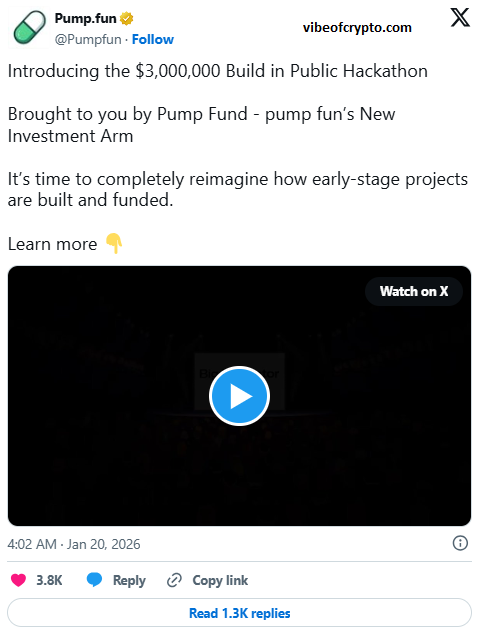
An important rule is that each team must retain at least 10% of their tokens. People are debating whether this rule makes teams more accountable.
According to one source, each project is estimated to be worth approximately $10 million. Each team will receive $250,000 in funding, with a total funding of $3 million.
Pump.fun has also clarified that projects don’t have to be crypto-based. Normal apps, consumer startups, or other ideas can also join, as long as they adopt a token-first model.
Table of Contents
Token-First Model Shapes Early-Stage Strategy
According to reports, Pump Fund will focus on projects whose products are popular, have strong social media engagement, are transparent, and have long-term sustainability.
The company has also stated that selected teams will receive mentorship from Pump.fun’s founders. This program is being described as a plan to build an entire ecosystem, not just a one-time funding program.
But most importantly, there is a strong focus on the token system. Pump.fun wants founders to launch their own token from day one and make that token the foundation of their business.
This means that as soon as a project starts, market ups and downs and speculation also come along, which can impact projects in the early stages of development.
PUMP Price Reacts to Announcement
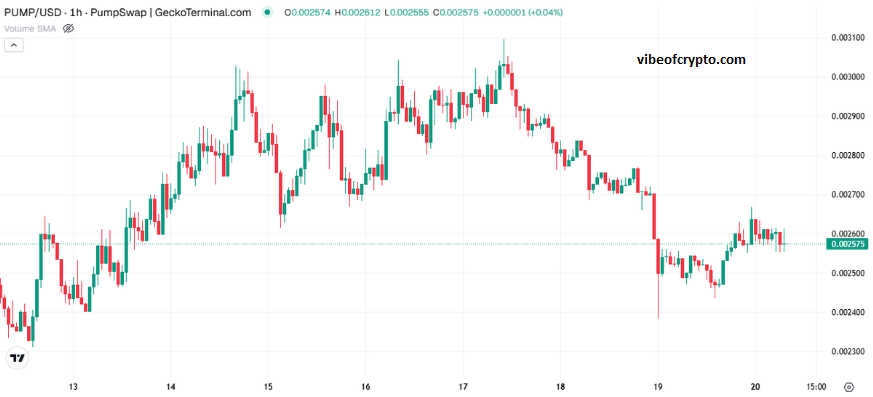
Following the announcement, Pump.fun’s native token, PUMP, rose by approximately 4% within a few hours.
But this increase did not last long. The token fell back after a short while.
As of Tuesday morning, PUMP was trading at approximately $0.0025, down approximately 4.4% from its high of $0.0026 after the announcement.
Why This Matters
The investment amount is small compared to traditional venture capital, but this means that memecoin platforms no longer want to limit themselves to just tez token launches.
They want projects to be long-term and sustainable, with continuous activity, not just short-term hype.
- Bitcoin 107K Breaks Strong as Bulls Eye Big Win
- Trump Crypto ETF Targets BTC And ETH in 2025
- Metaplanet Bitcoin Purchase Sparks Explosive 1111 BTC Buy
- Hyperliquid Builder Codes Top $10M New Crypto Boom Coming?
- Bitcoin Hits $123K Ahead of Make-or-Break
- Stellar (XLM) Explained: Easy Guide for Beginners
- JPMorgan Launching Crypto-Backed Loans With BTC and ETH
- SYRUP Defies Market Trends After Upbit Listing
- SHIB Hype Fades While Remittix Rises as the Smarter Crypto Choice
- CryptoPunks NFT Sells for $2.5M as NFT Market Shows Fresh Momentum
- XRP Price Expansion Phase: Can Ripple Reach $7 in 2025?
- Cardano WLFI Stablecoin and Chainlink Partnerships
- Binance Futures Trading Paused: Market Prices Rattled
People Also Ask – Pump.fun $3 million:
What is Pump.fun?
Pump.fun is a Solana-based platform primarily known for launching memecoins. The platform now also supports early-stage startups through its Pump Fund, indicating its focus on building long-term ecosystems, not just short-term token launches.
What is the Pump Fund?
The Pump Fund is a $3 million investment program that will fund 12 early-stage projects. It includes funding, mentorship, and a token-first model, allowing projects to grow through market interest.
How does the “Build in Public” hackathon work?
Teams don’t give traditional pitches. Teams launch their own tokens, and community participation and market engagement are key indicators of traction. Projects must hold at least 10% of their tokens to qualify.
What is the Token-First Model?
Token-First Model means that startups use their business core token from day one. Tokens can provide ownership, incentives, or utility within the project ecosystem. But this also comes with market fluctuations and speculation.