
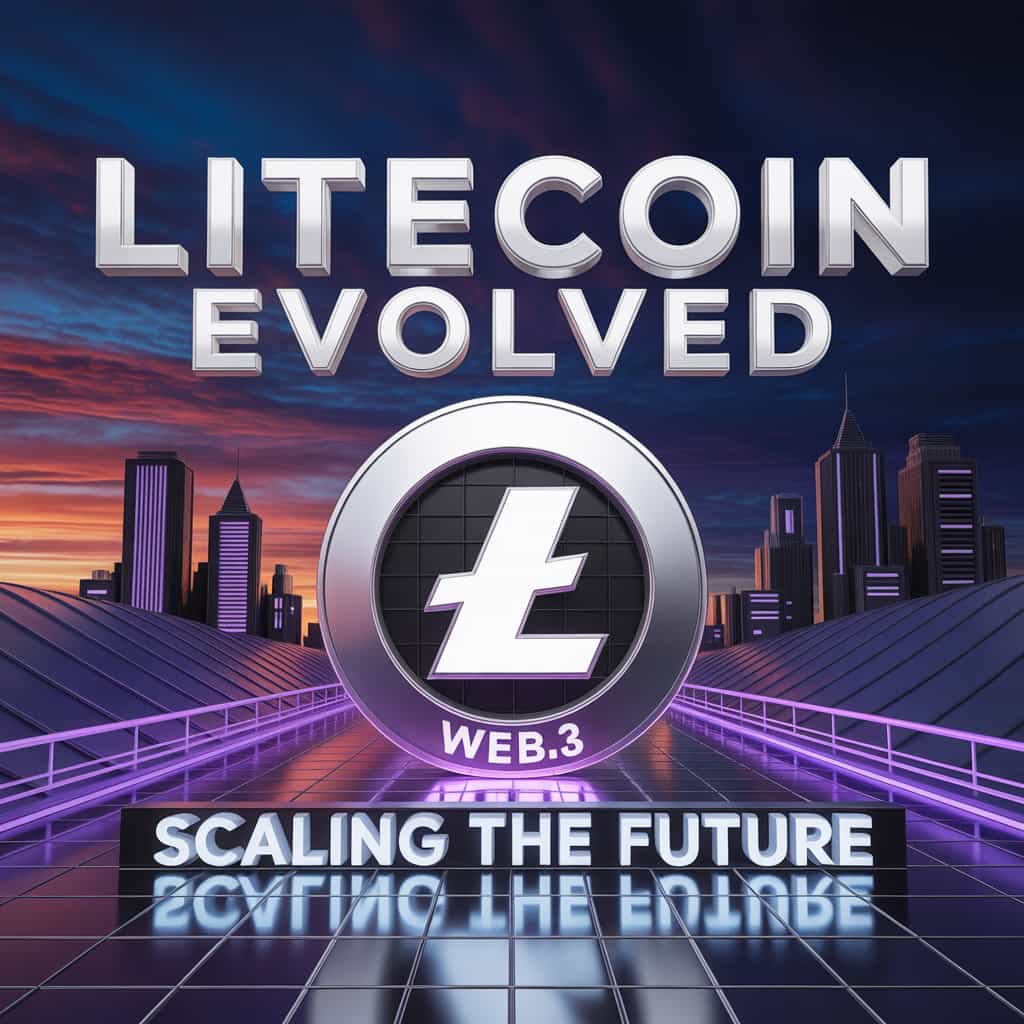
Litecoin web3 record growth, Layer-2 smart contracts, and the first U.S. ETF are a great way for this blockchain. Litecoin (LTC), an old proof-of-work blockchain, is now evolving in new ways, not just for digital payments.
In 2025, the network saw record transactions, more institutions invested, and Layer-2 technology arrived that allows smart contracts and cross-chain applications like Ethereum.
2025 shows that the market is now ready for a more capable Litecoin,
says Charlie Lee, Litecoin’s creator.
2026 will be the beginning of that new era.
Table of Contents
Network Record Transactions Security Levels – Litecoin web3
Litecoin network reached new highs in 2025. According to blockchain venture studio Lunar Digital Assets, the blockchain surpassed 360 million lifetime transactions, with over 60 million transactions added in 2025 alone.
The network hashrate also grew significantly, strengthening its security as a decentralized proof-of-work blockchain.
Analysts say these high transactions and strong security lay the foundation for advanced applications, such as decentralized finance (DeFi) and tokenized real-world assets (RWAs).
Institutions Notice
2025 was also a turning point for institutional involvement. Publicly traded companies, such as Luxxfolio and MEI Pharma, invested some of their treasury in Litecoin because they appreciated its long-term security, clear regulations, and stable operations.
Regulatory milestones also boosted confidence. In October 2025, Canary Capital launched the first U.S. spot Litecoin ETF, further popularizing Litecoin in regulated markets.
In contrast to Bitcoin earlier ETF attempts or Ethereum staking and securities debates, Litecoin proof-of-work design offers a simpler and more predictable regulatory framework.
Layer-2 Smart Contracts
Technical innovation is a key driver of Litecoin evolution. LitVM, the network’s first EVM-compatible Layer-2 solution, will launch its testnet in the first quarter of 2026.
This rollout will allow developers to deploy smart contracts, test zero-knowledge applications, and test scalable rollup-based architectures, which could create new economic opportunities within the Litecoin ecosystem.
LitVM is built using Polygon CDK and BitcoinOS technologies and aims to connect Litecoin base layer to EVM smart contracts, zero-knowledge rollups, and cross-chain liquidity.
Roc Zacharias, CEO of Lunar Digital Assets, says,
“As the testnet opens to builders in 2026, developers, enterprises, and financial institutions will unlock new use cases that were previously not possible on Litecoin’s base layer.”
LitVM will give developers the ability to deploy DeFi applications, test RWAs, and build scalable and interoperable solutions across multiple blockchain networks.
Experts say Litecoin web3 stability and regulatory clarity set it apart from other legacy networks, and it could become the foundation for new financial and Web3 services.
Why This Matters – Litecoin web3
The 2025 milestones show that Litecoin is entering a new phase. It is no longer just a payment network, but a programmable blockchain that can support more financial and decentralized applications.
- Bitcoin 107K Breaks Strong as Bulls Eye Big Win
- Trump Crypto ETF Targets BTC And ETH in 2025
- Metaplanet Bitcoin Purchase Sparks Explosive 1111 BTC Buy
- Hyperliquid Builder Codes Top $10M New Crypto Boom Coming?
- Bitcoin Hits $123K Ahead of Make-or-Break
- Stellar (XLM) Explained: Easy Guide for Beginners
- JPMorgan Launching Crypto-Backed Loans With BTC and ETH
- SYRUP Defies Market Trends After Upbit Listing
- SHIB Hype Fades While Remittix Rises as the Smarter Crypto Choice
- CryptoPunks NFT Sells for $2.5M as NFT Market Shows Fresh Momentum
- XRP Price Expansion Phase: Can Ripple Reach $7 in 2025?
- Cardano WLFI Stablecoin and Chainlink Partnerships
- Binance Futures Trading Paused: Market Prices Rattled
People Also Ask:
What is Litecoin, and how is it different from Bitcoin?
Litecoin is an old proof-of-work blockchain. It’s as secure as Bitcoin, but Litecoin blocks are created faster and have lower transaction fees, making it more widely used for payments.
What happened with Litecoin in 2025?
In 2025, Litecoin saw record transactions, more companies invested, and began allowing Layer-2 applications, allowing it to do more than simple payments.
What is a Layer-2 solution like LitVM?
Layer-2 networks are built on top of blockchains to improve speed, efficiency, and features. LitVM, Litecoin’s first EVM-compatible Layer 2, allows Ethereum-style smart contracts, zero-knowledge apps, and cross-chain transactions.
What is proof-of-work (PoW)?
Proof-of-work is a system that secures the blockchain using computers’ calculations. Litecoin’s PoW design makes it secure, decentralized, and predictable, which appeals to both developers and investors.
What are zero-knowledge rollups?
Zero-knowledge rollups are a blockchain technology that improves speed and privacy. They process many transactions off-chain, then verify and send them on-chain, making the network fast and efficient.