
These global messaging standard-compliant altcoins are set to rule the worldwide payment system after ISO 20022.
The European Payments Council, SEPA, SWIFT, and many large traditional banks are abandoning the old MT standard and shifting to ISO 20022 by November 2025.
Table of Contents
XLM and XRP: Deep ISO 20022 Standards?
While this upgrade is coming this week, SWIFT expects 90% of all transactions transitioning to ISO 20022 by the start of 2026. Registration Management Group, the key organization behind ISO 20022 compliance, has quite a few members or parent companies related to popular Layer 1s.
Ripple, Stellar Lumens , Hedera Hashgraph and Algorand are all members, with Ripple joining in 2020. Stellar followed suit, giving both OG altcoins a chance at reshaping DLT blockchain’s like XRP vs XLM interoperability with SWIFT & other banker giants from the inside.

Playing a key role in stablecoin adoption, including CBDCs, ISO 20022 messaging standard is most favorable for compliant major-cap altcoins that have already proven their worth in cross-border payments or traditional banking integrations.
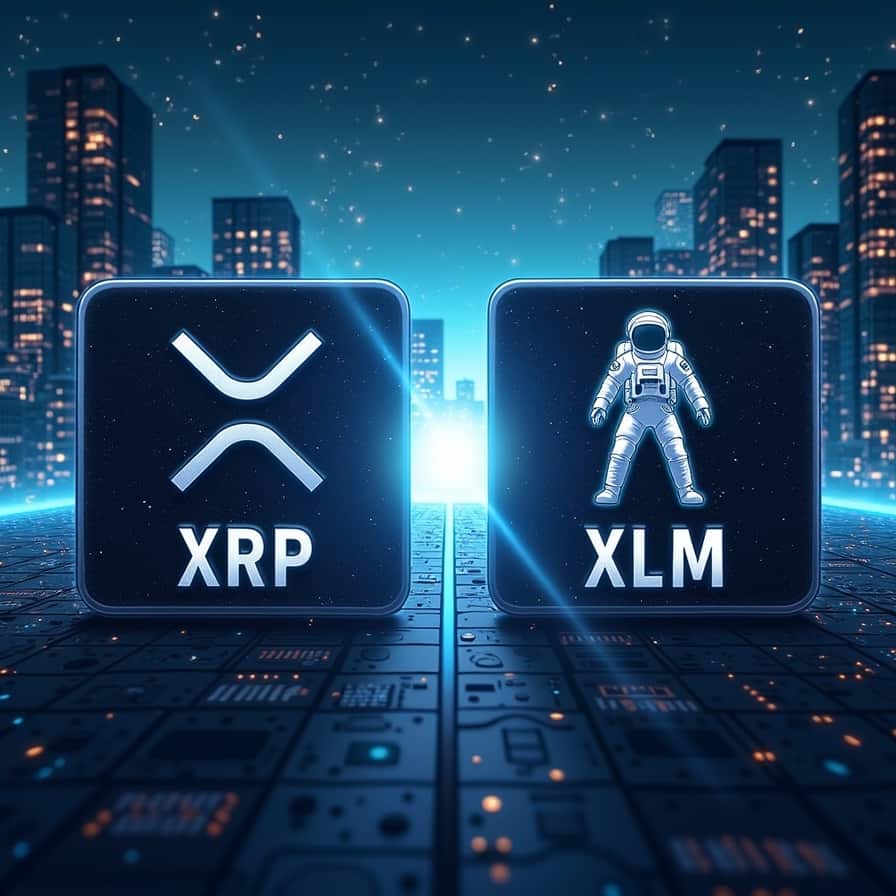
XRP vs XLM Showdown Whos Got The Edge
BlackRock and JP Morgan are buying ISO 20022-compliant coins in droves. Ripple has partnerships with over 300 banks, including Santander and SEB. Ripple is also adding its RLUSD stablecoin.
Stellar (XLM) also has partnerships with MoneyGram and IBM World Wire, but its trading volume is not as strong as XRP.
Ripple’s (XRP) spot market volume often exceeds $2 billion. This allows the coin to grow even with lower fees. Futures market volume is 4 times greater than spot. Futures volume reached $8 billion in just 24 hours, indicating that traders are eager to profit from XRP.
The daily trading volume of Stellar Lumens (XLM) is typically $100 million–$200 million. Approximately 7 million transactions occur daily on XLM, while over 40 million transactions occur on XRP. Both blockchains process blocks in approximately 5 seconds, but XRP’s network is much more active than XLM’s.
- Bitcoin 107K Breaks Strong as Bulls Eye Big Win
- Trump Crypto ETF Targets BTC And ETH in 2025
- Metaplanet Bitcoin Purchase Sparks Explosive 1111 BTC Buy
- Hyperliquid Builder Codes Top $10M New Crypto Boom Coming?
- Bitcoin Hits $123K Ahead of Make-or-Break
- Stellar (XLM) Explained: Easy Guide for Beginners
- JPMorgan Launching Crypto-Backed Loans With BTC and ETH
- SYRUP Defies Market Trends After Upbit Listing
- SHIB Hype Fades While Remittix Rises as the Smarter Crypto Choice
- CryptoPunks NFT Sells for $2.5M as NFT Market Shows Fresh Momentum
- XRP Price Expansion Phase: Can Ripple Reach $7 in 2025?
- Cardano WLFI Stablecoin and Chainlink Partnerships
- Binance Futures Trading Paused: Market Prices Rattled
People Also Ask – XRP vs XLM:
When will SWIFT fully migrate to ISO 20022?
On the weekend of November 22–24, 2025. After that, all cross-border payments will have to use the ISO format, otherwise delays may occur.
Does SWIFT run on XRP vs XLM?
No. SWIFT only sends messages. It does not hold or settle any coins. Banks themselves decide which system the money will be settled through.
Which coin are most banks using right now?
XRP. RippleNet is used by more than 300 banks, such as Santander, SBI, Standard Chartered, and Bank of America. Stellar (XLM) also has partnerships , but its live high-volume bank routes are very limited.
Which coin is closer to ISO 20022?
Both XRP and XLM are fully ISO 20022 ready. Both can send data in the new format. The only difference is that XRP is being used more.
Will ISO 20022 immediately boost the price of XRP or XLM?
No. ISO only improves messaging, not settlement. Prices will only increase when more banks bring their real volume to RippleNet or Stellar. Currently, only a small portion of SWIFT’s $150 trillion yearly payments come through crypto.